

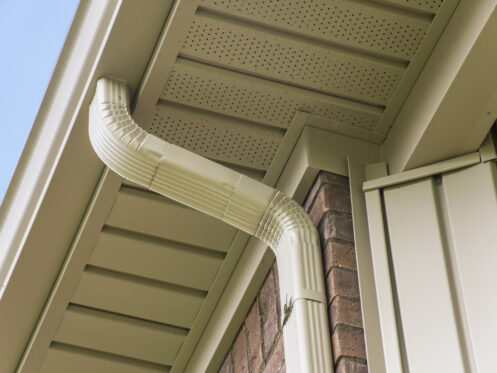
A wet winter does not just affect shingles and gutters. Weeks of rain, snow, and freeze cycles can soak the wooden boards that frame your roofline. When moisture lingers in fascia and bargeboards, rot can take hold quietly and spread before you notice it from the ground.
What Fascia and Bargeboards Actually Do
Fascia boards run along the lower edge of your roof where gutters attach. Bargeboards sit along the sloped edge of a gable roof. Both pieces may look decorative, yet they protect exposed wood and support roofing edges. They also shield the roof deck from wind-driven rain and help prevent moisture from entering through the eaves.
When those boards stay wet for extended periods, they begin to weaken. Paint may blister or peel first. That cosmetic change can seem minor, yet it often signals trapped moisture underneath. If water seeps behind the paint film and into the wood grain, decay can begin along joints and nail holes. Once rot starts, it travels through soft fibers and reduces the board’s strength.
You might not see dramatic damage right away. A sagging gutter or slight wave along the roof edge can be the first hint that the wood beneath has lost integrity. Since fascia supports gutter weight, a weakened board may allow fasteners to pull loose during heavy runoff. Understanding their function helps you recognize why early signs deserve attention.
How Wet Winters Accelerate Dry Rot
Dry rot doesn’t require standing water. It needs repeated exposure to moisture and limited airflow. During a damp winter, rain soaks wood, and then cold air slows evaporation. Snow can melt and refreeze along roof edges, keeping boards wet longer than you realize.
If gutters clog with leaves or ice, water may back up and sit against fascia boards. That steady contact feeds fungal growth. Even small leaks at gutter seams can drip onto bargeboards day after day. When sunlight stays limited during the winter months, those boards don’t dry out fully.
You may notice darker streaks along the grain or a soft texture when you press lightly with a screwdriver. Wood that once felt firm can crumble near the surface. If boards feel spongy near the bottom edge or around fasteners, moisture has likely penetrated deeper layers. Wet winters create the perfect setting for rot because they combine saturation with slow drying.
Visible Signs That Point to Trouble
Start with a simple visual inspection from the ground. Look along the roofline for uneven edges, flaking paint, or discoloration that looks patchy compared to the rest of the trim. Check for sections where gutters tilt or appear loose.
If you can safely view the boards up close, examine the wood grain. Small cracks that widen or show darkened interiors may indicate internal decay. Pay attention to corners and joints where boards meet. Those areas trap moisture and often rot first.
You might also notice insects gathering near damp wood. Softened sections can attract pests that tunnel into weakened areas. If you see fine dust below the roof edge or small holes in the trim, the structure may already be compromised. Inside the attic, staining along the roof edge or a musty odor near the eaves can signal that moisture has traveled inward.
When Repair Is Enough and When Replacement Makes Sense
Surface rot that affects a small area may allow targeted roof repair. We can remove damaged sections and replace them with new treated wood. Proper sealing and painting help prevent future moisture entry.
When decay spreads along a long stretch or affects attachment points, full board replacement may be the safer option. Soft wood doesn’t regain strength once compromised. Leaving weakened sections in place risks continued gutter instability and further water intrusion.
You may also consider upgraded materials. Composite trim or moisture-resistant boards can offer improved durability in climates with heavy seasonal rain. Proper installation matters as much as material choice. Sealed joints, correct flashing, and secure gutter fastening all reduce repeat exposure.
Protect Your Roofline Before Minor Rot Spreads
Fascia and bargeboard damage often begins quietly after a damp season. Catching soft spots, loose gutters, or peeling paint early keeps repair work manageable and protects the roof structure beneath. At Clark's Gables Roofing, we provide roofline inspections, trim repair, gutter service, and exterior wood replacement to restore strength where winter moisture has taken its toll. If your roof edge shows signs of rot or your gutters no longer sit securely, schedule an evaluation with Clark's Gables Roofing in Roseville, CA, and address the damage before another wet season makes it worse.


